
 Pictured at 120 cm including pot
Original product and size images are retained; living plants vary naturally.
A tropical seedling grown from a coconut
Cocos nucifera
Also known as: Coconut palm · Coconut plant · Cocos nucifera
Dwarf Coconut Palm
This Cocos nucifera is a true coconut seedling. Juvenile leaves often have strong pleats and forked tips, unlike the more divided fronds that develop later. A single plant grows from a coconut and needs a warm, stable position with ample daylight. Indoors, light, root moisture and cold air-conditioning need attention. All six supplied choices—20, 40, 60, 80, 100 and 120 cm—include the pot. Assess the window or balcony conditions before choosing space for its leaves.
Supplied total heights including pot: 20 / 40 / 60 / 80 / 100 / 120 cm. Leaf number, form, exposed husk and posture vary naturally; these are supplied sizes rather than mature heights or growth limits.
Plan daylight first, then leaf clearance
Choose a very bright window, warm conservatory or sunny sheltered balcony. Increase sun exposure gradually after a lower-light position; an ordinary dim office corner is a poor match.
Keep tender leaves clear of curtains, hot glass and seating contact. Support the pot rather than pulling leaves or the coconut, and move it into warmth during cold weather, away from direct air-conditioning.
01 Choose height
All-purpose plant food
Optional extra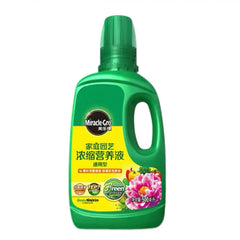
Miracle-Gro Liquid Fertilizer for Home Gardening 250ml/1.45L
Optional feed during active growth; dilute to the bottle label and pause when roots are stressed.
Plant characteristics & growing tips
Dwarf Coconut Palm · Cocos nucifera
Plant characteristics
- Plant identity
- Cocos nucifera, a coconut palm in Arecaceae
- Juvenile leaves
- Often strongly pleated with naturally forked tips
- Plant form
- A single sprout from a coconut with one growing centre
- Later growth
- Leaf form changes with growth; seedling height is not a limit
- Light and warmth
- Needs ample daylight and steady warmth; cold-sensitive
- Root moisture
- Keep mix moderately moist with free drainage
Hong Kong growing tips
- Window daylight
- Keep daylight available rather than moving deep into the room
- Air-conditioning
- Avoid direct cold airflow and chilling beside glass
- Cold spells
- Move into a warm bright position before cold weather
- Attached coconut
- Retain its planting level rather than covering with thick stones
- Tender-leaf clearance
- Keep the central spear clear of shelves, ties and cutting
- Underside checks
- Inspect for scale, mealybugs and fine mite webbing
References
Find a place for your Coconut Palm
Five decorative-planter settings show the 120 cm supplied size. Smaller choices still need ample daylight and a stable position with room for their leaves.
Decorative planters in scene images are styling references and sold separately. Supplied plant height includes the nursery pot.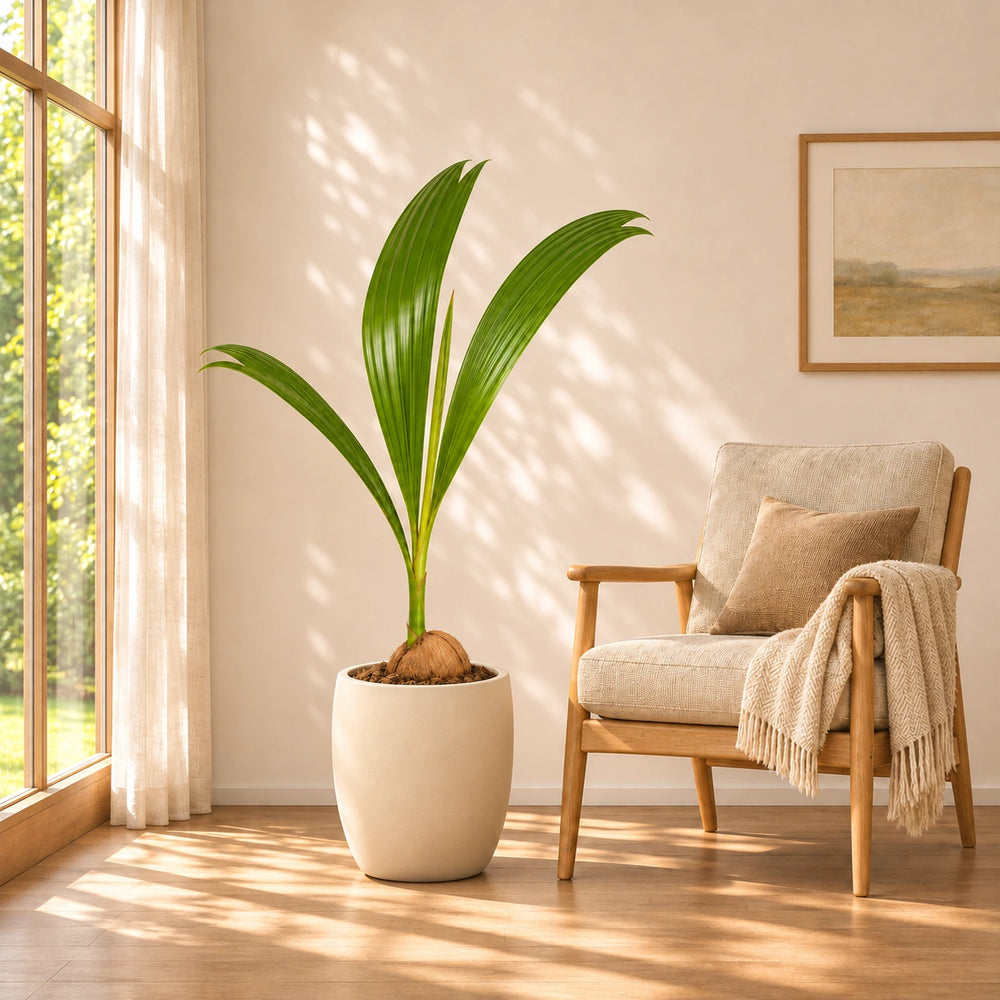
Living room beside a large window
Keep ample daylight available, with leaf clearance and access to drain the outer pot.
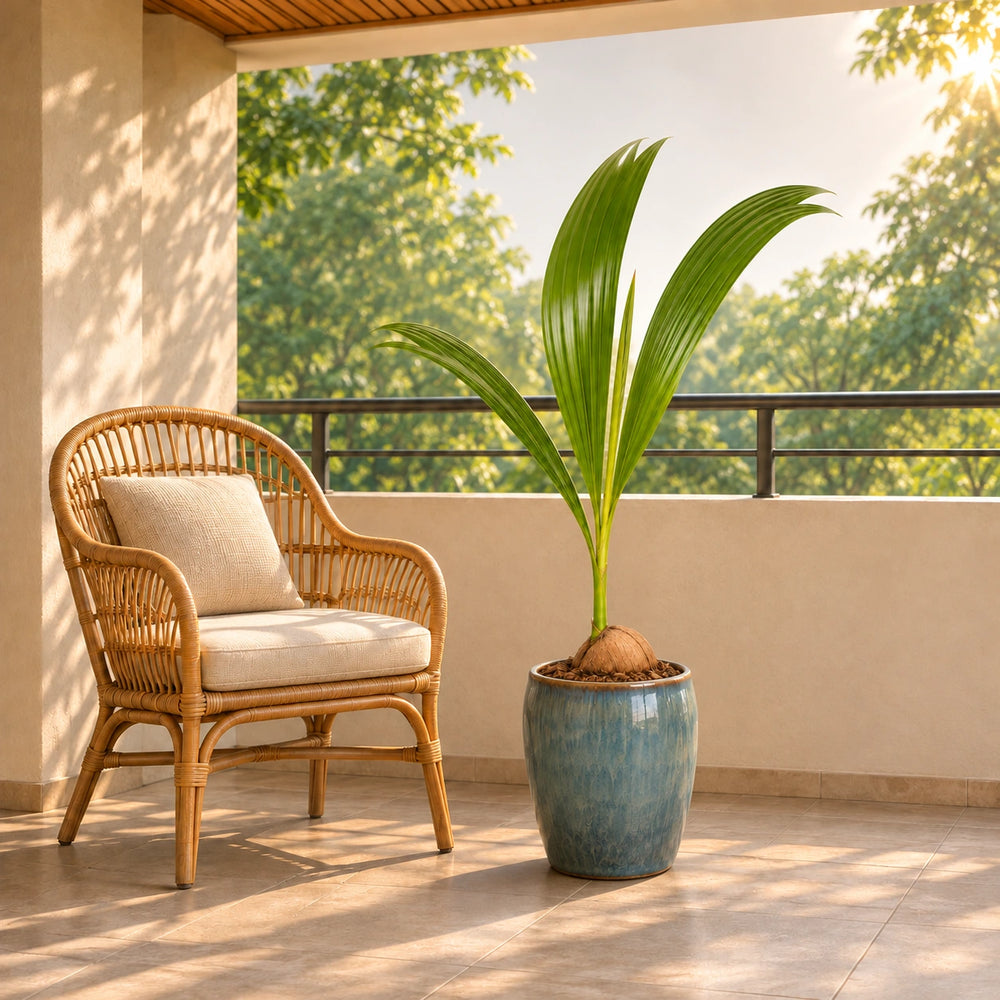
Sunny sheltered balcony
Keep ample daylight available, with leaf clearance and access to drain the outer pot.
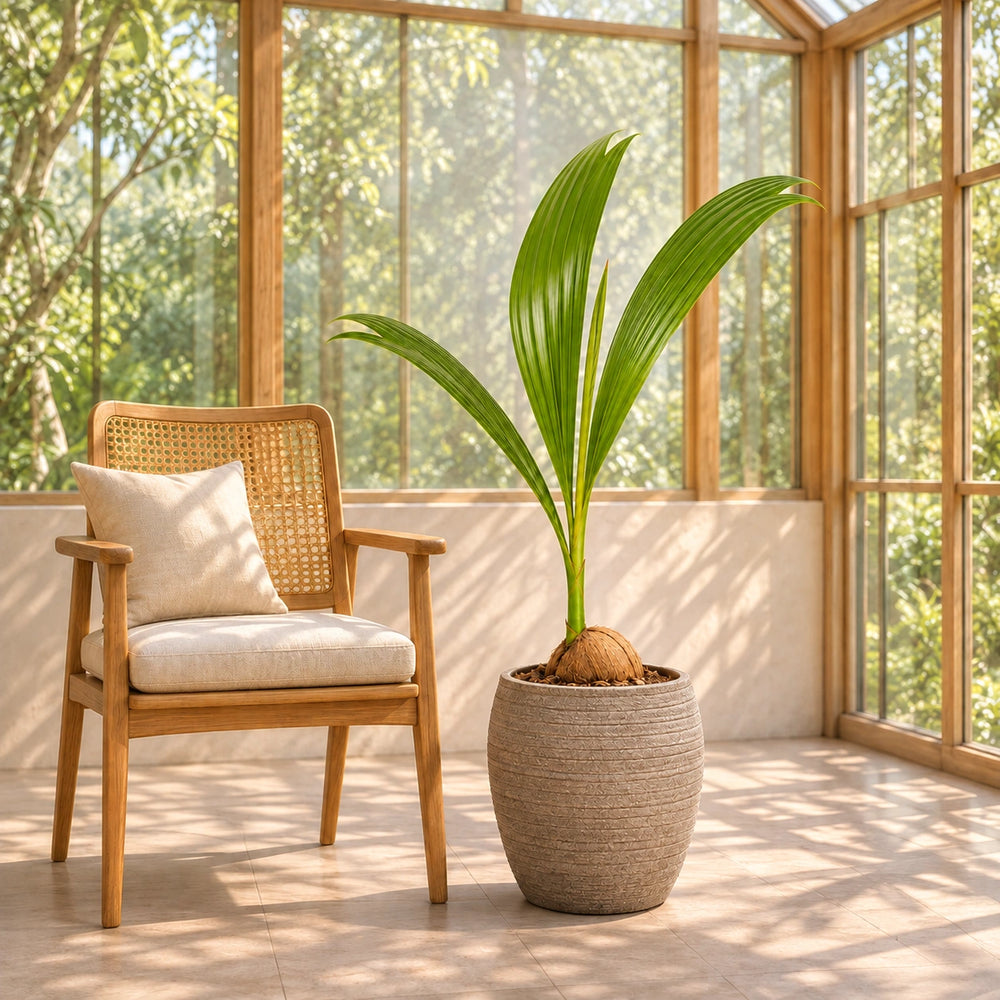
Warm conservatory
Keep ample daylight available, with leaf clearance and access to drain the outer pot.
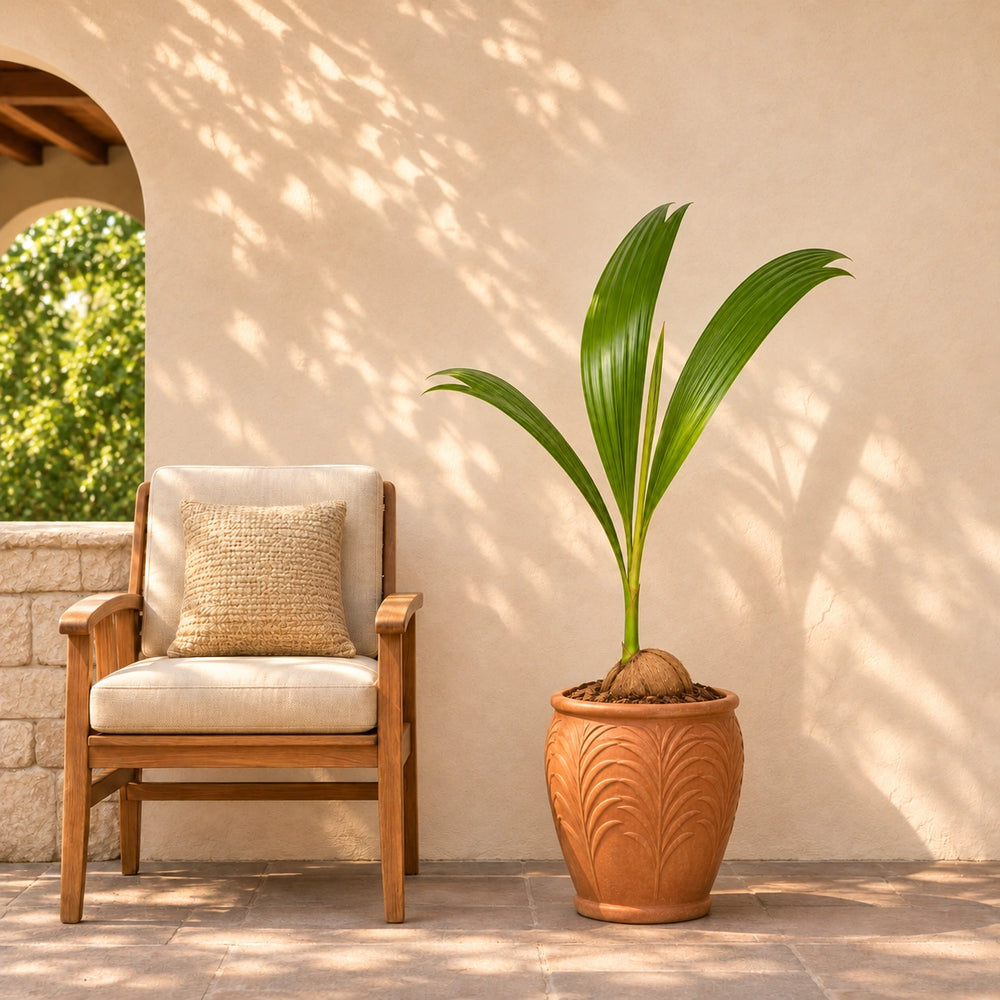
Daylit courtyard corner
Keep ample daylight available, with leaf clearance and access to drain the outer pot.
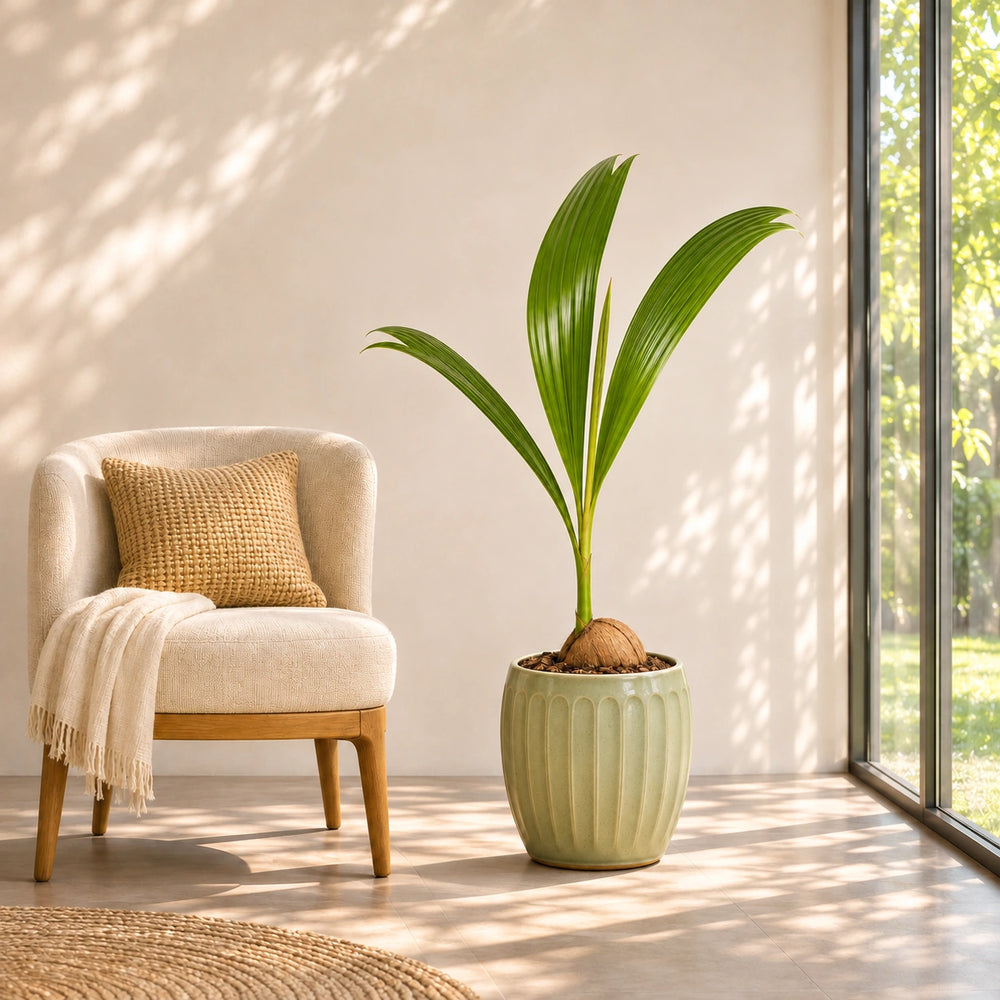
Bright studio window
Keep ample daylight available, with leaf clearance and access to drain the outer pot.
More plants to consider
Arrange in separate pots, leaving light, airflow and watering access for each.
-

Bird of Paradise
Give bird-of-paradise overhead clearance without blocking the coconut’s daylight.
View plant -
-

Planting & styling guide
Keep the coconut and young roots undisturbed
- Let the supplied pot settle in stable warmth and bright light before disturbing roots or lifting the coconut.
- When roots become crowded, choose a slightly larger draining pot with moisture-retentive, freely draining mix, retaining the original planting depth and exposed husk level.
- Support the pot without twisting the young shoot. Leave the central spear intact rather than topping the palm to control height.
Check light, warmth and mix before changing care
- Water as the surface starts drying, then drain Check mix and pot weight to avoid a fully dry root ball or water trapped in the outer planter. Cooler or darker conditions slow drying, so adjust checks rather than keeping a hot-weather schedule.
- Feed to the label during healthy new growth Once settled with healthy roots and new growth, dilute a suitable feed to its label. Consider palm nutrition for longer-term care; stronger feed will not correct chilling, poor light or waterlogging.
- Retain healthy green leaves and the central spear Trim dead growth carefully without tearing leaves or forcing the spear open. Check roots and conditions if several leaves change colour suddenly; colour alone does not identify a disease.
Group separate pots with their own light and watering
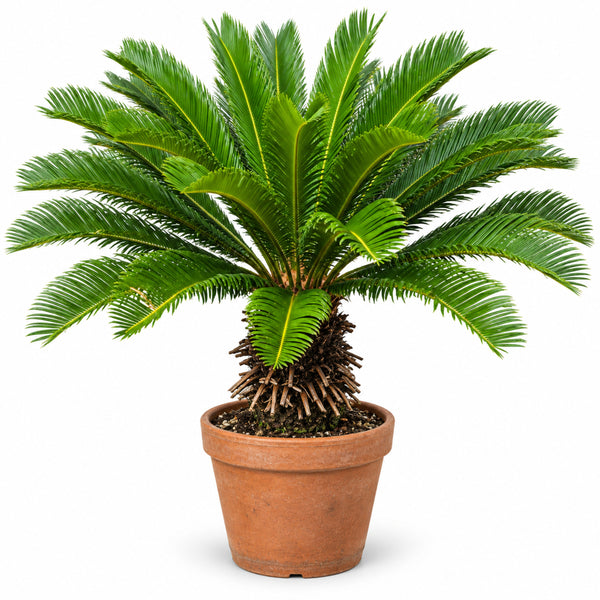
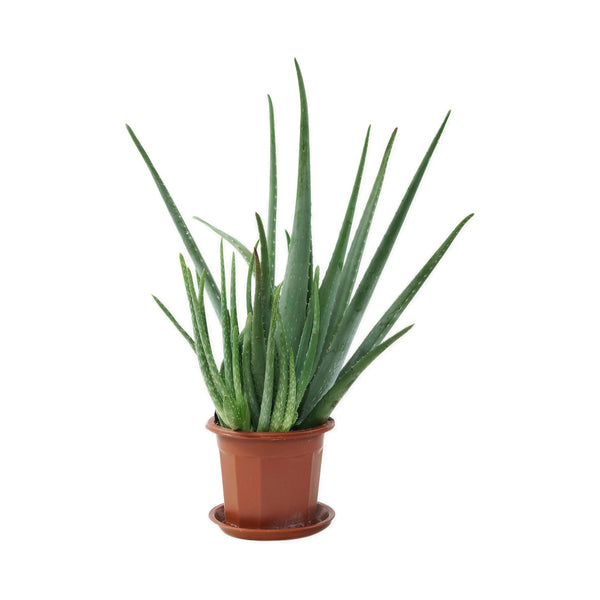
Give bird-of-paradise and the coconut room to open leaves above. Keep sago lower with rigid leaves clear of routes, and check aloe separately rather than watering it as often as the coconut. Keep each plant’s daylight unblocked.
See companion plants ↑Size guide
Compare people and plants for a sense of scale. Refer to your selected option for this product's height.
 View full-size image ↗
Frequently asked questions
Dwarf Coconut Palm
Should I remove the coconut at the surface?
It is the seed from which the young palm grew. Leave it attached without twisting, removing or burying it deeper, and retain its position when repotting. This is an ornamental plant; its attached coconut is not sold as food.
Does a dwarf coconut stay small permanently?
Dwarf does not mean a growth limit. This listing does not promise a named cultivar or fixed mature size. The 20–120 cm choices are supplied heights including pot; allow for future leaves and roots without expecting guaranteed fruiting in a container.
Are pleated leaves or forked tips damage?
Juvenile coconut leaves can be pleated and naturally forked, with leaf form changing as the palm develops. Do not force an unopened spear apart. Spreading dark areas, soft decay or sudden collapse call for closer checks of conditions and roots.
Will an ordinary office or sunless room suit it?
Usually not. A coconut needs very bright daylight, warmth and regular attention. Dim corners and direct cold airflow make indoor care harder; assess actual light before choosing an empty space by size alone.
From our nursery to your home
The last few
details, taken care of.
We confirm your delivery date by WhatsApp. Tell us about lift access or stairs so we can plan your arrival properly.
estimated delivery
Is delivery included?
Free-delivery thresholds depend on your area and order total: HK$500+ for Tung Chung / South Lantau, over HK$800 for Discovery Bay, and HK$1,000+ for other areas. Check the delivery fee at checkout.
Will you bring it inside?
With lift access, plants can be placed indoors. For walk-up buildings, standard delivery is to the building entrance. Stair carrying is extra and should be arranged in advance.
Can I collect it from the nursery?
Yes. Pickup is available at 20D Lo Wai Village, Pui O, Monday–Saturday, 10am–5pm. Please make an appointment once your order is ready.