
 Product view
Original product and size images are retained; living plants vary naturally.
Fine leaves and red flowers with a seasonal rhythm
Punica granatum
Also known as: Pomegranate · Punica granatum · 石榴 · 安石榴
Pomegranate Tree
Pomegranate (Punica granatum) has narrow glossy leaves, slender woody branches and orange-red flowers, with fruiting affected by cultivar, age and conditions. Choose 30–40, 50–80 or 150–180 cm total height including pot. Seasonal leaf loss is part of its character. No dwarf cultivar or flowers and fruit on arrival are promised.
All three heights include the supplied pot, measured from base to plant tip. Original age labels remain; spread and flower or fruit condition vary.
Keep sun reaching the fine leaves and flowering branches
Choose a sunny balcony, patio or courtyard, keeping small plants clear of taller-pot shade and acclimatising to stronger light.
Leave branch clearance and airflow and drain outer pots after rain. Reassess root moisture when seasonal foliage is sparse.
01 Choose total height including pot
All-purpose plant food
Optional extra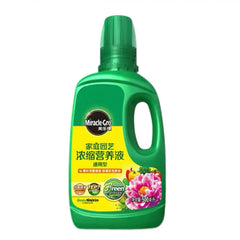
Miracle-Gro Liquid Fertilizer for Home Gardening 250ml/1.45L
Optional feed during growth, to a label suitable for edible plants. Assess sparse foliage or stressed roots first rather than increasing doses to force flowers or fruit.
Plant characteristics & growing tips
Pomegranate Tree · Punica granatum
Plant characteristics
- Narrow glossy leaves
- Small leaves line fine woody branches
- Red flowers
- Orange-red petals emerge from a thick calyx
- Seasonal foliage
- A deciduous fruit tree with seasonal leaf coverage
- Growth form
- Shrub or small-tree form; no dwarf-cultivar claim
- Three sizes
- All three supplied heights include the pot
- Fruit expectations
- Not every flower develops into a fruit
Hong Kong growing tips
- Sun for small plants
- Keep small plants clear of rail and tall-pot shade
- Air around flowers
- Leave airflow after rain, without a persistently wet crowded crown
- Root drainage
- Water small pots as needed; no retained outer-pot water
- Sparse-foliage checks
- Reassess moisture rather than retaining a hot-weather schedule
- Flower and fruit checks
- Observe calyxes, fruit stalks and branch support
- Pruning decisions
- Thin crowding selectively after checking flower and fruit positions
Find a place for your Pomegranate Tree
Five settings show approximately 65 cm including pot within the 50–80 cm option, without implying equal canopy sizes or flowers on arrival. Planters are extra.
Decorative planters in scene images are styling references and sold separately. Supplied plant height includes the nursery pot.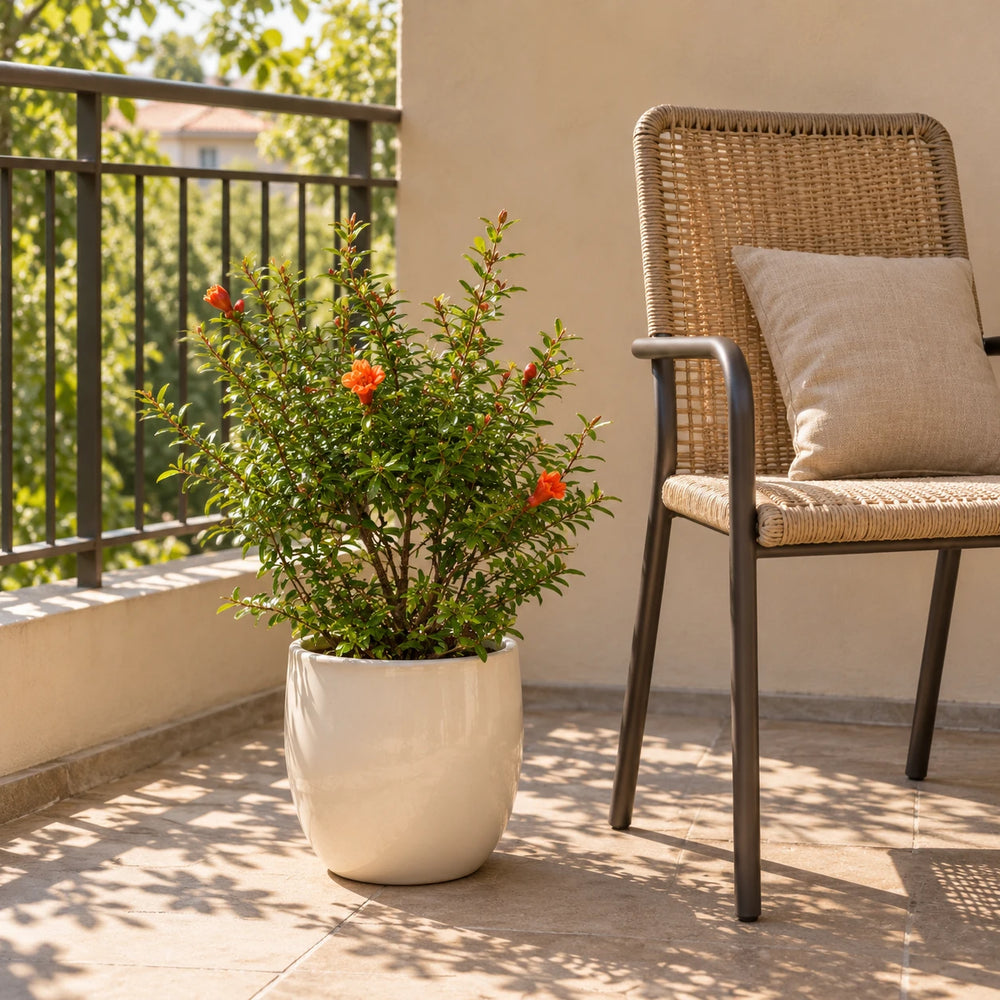
Sunny balcony corner
Shown at the medium small-shrub scale in real sun; flowering varies with season and plant.

Beside a patio chair
Shown at the medium small-shrub scale in real sun; flowering varies with season and plant.
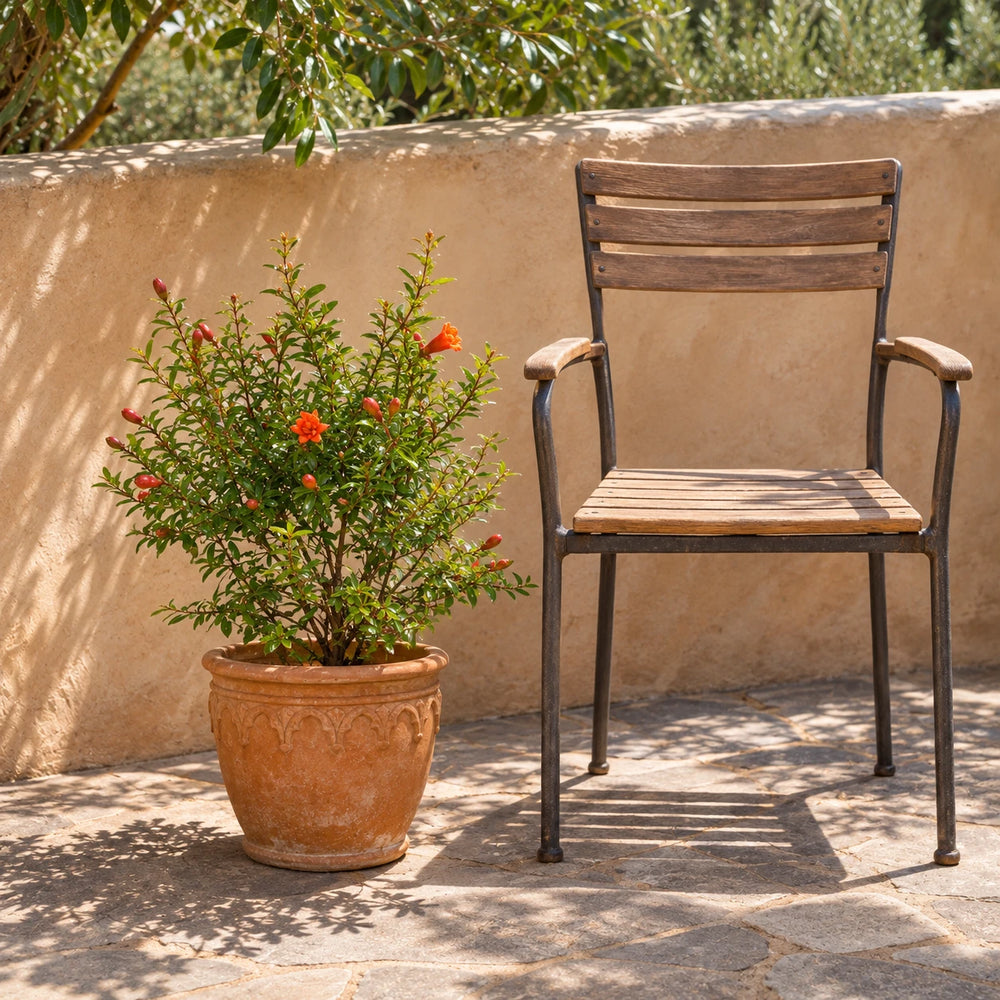
Open courtyard setting
Shown at the medium small-shrub scale in real sun; flowering varies with season and plant.

Sheltered sunny terrace
Shown at the medium small-shrub scale in real sun; flowering varies with season and plant.

Bright open porch
Shown at the medium small-shrub scale in real sun; flowering varies with season and plant.
More plants to consider
Arrange in separate pots, leaving light, airflow and watering access for each.

Planting & styling guide
Start with the supplied root ball and planting level
- Carry by the pot, not fine branches, and settle where sun and watering access are available.
- Repot when roots need room, at the original depth in a holed container that drains surplus water.
- Check an outer pot’s internal opening, depth and drainage; photographed decorative pots are not basic included items.
Respond to foliage and flower or fruit stage
- Reassess water as foliage changes Water according to the mix, reassessing with sparse foliage and avoiding repeated severe drying or standing water.
- Feed to the label during growth Establish sun, roots and airflow, then follow a suitable label without stronger concentrations or crop promises.
- Check flowering branches before selective work Locate useful flowers and fruit, then remove damaged or crowded growth selectively rather than repeatedly shearing a fixed ball.
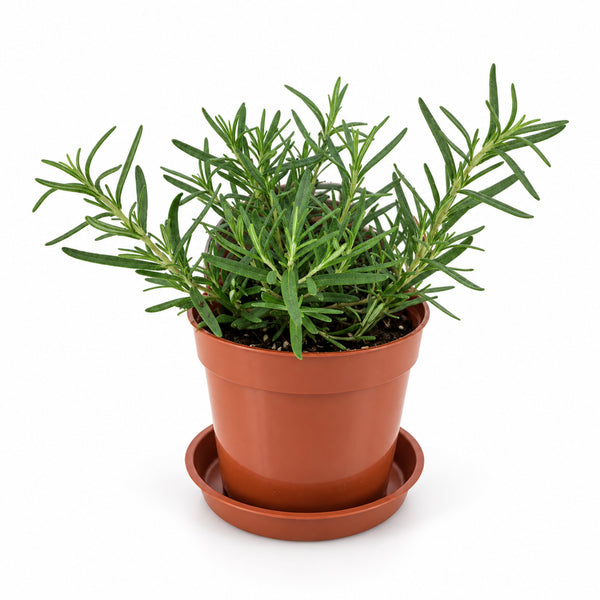
Pair fine foliage and herbs in separate pots
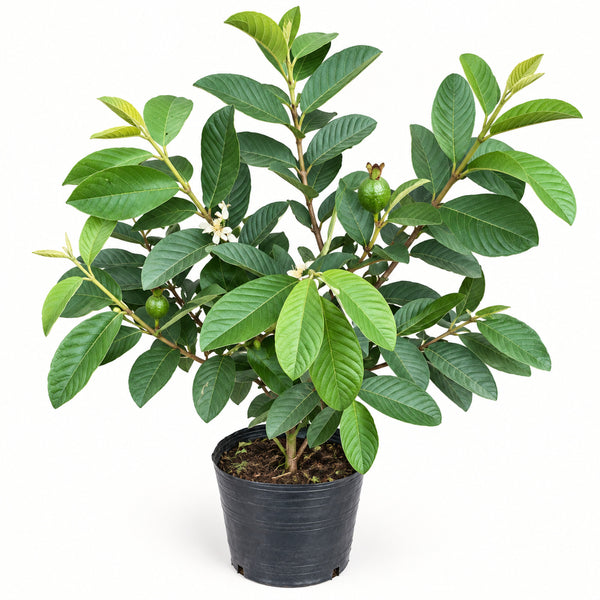
Keep rosemary and thyme lower in sun with separate moisture checks; give Guava its own canopy space without shading the smaller pomegranate.
See companion plants ↑Size guide
Compare people and plants for a sense of scale. Refer to your selected option for this product's height.
 View full-size image ↗
Frequently asked questions
Pomegranate Tree
Will every red flower become a pomegranate?
No. Pollination, cultivar, plant stage and conditions affect fruiting; flowering and cropping are separate stages.
Does sparse foliage or leaf fall mean it has died?
Pomegranate is deciduous. Consider season, branches and root moisture before diagnosing a problem or adding more water and feed.
Does the small photographed plant establish a dwarf cultivar?
No. A dwarf cultivar is not documented; the three options describe supplied included-pot heights, not mature dimensions.
Is the 150–180 cm option the same size as the scene plant?
No. New settings show the medium 50–80 cm scale. Allow space for the option selected; flowering also varies.
From our nursery to your home
The last few
details, taken care of.
We confirm your delivery date by WhatsApp. Tell us about lift access or stairs so we can plan your arrival properly.
estimated delivery
Is delivery included?
Free-delivery thresholds depend on your area and order total: HK$500+ for Tung Chung / South Lantau, over HK$800 for Discovery Bay, and HK$1,000+ for other areas. Check the delivery fee at checkout.
Will you bring it inside?
With lift access, plants can be placed indoors. For walk-up buildings, standard delivery is to the building entrance. Stair carrying is extra and should be arranged in advance.
Can I collect it from the nursery?
Yes. Pickup is available at 20D Lo Wai Village, Pui O, Monday–Saturday, 10am–5pm. Please make an appointment once your order is ready.